Demystifying the US Political System
Power Dynamics and the Midterm Elections
With midterm elections approaching, international observers are closely watching the United States. Understanding the mechanics of the US political system—specifically how power is distributed and wielded—is crucial for anticipating legislative shifts and policy impacts. This case study breaks down the US political apparatus and explains why the upcoming midterms will determine the trajectory of the current President's administration.
1. The Foundation: Checks, Balances, and Power Distribution
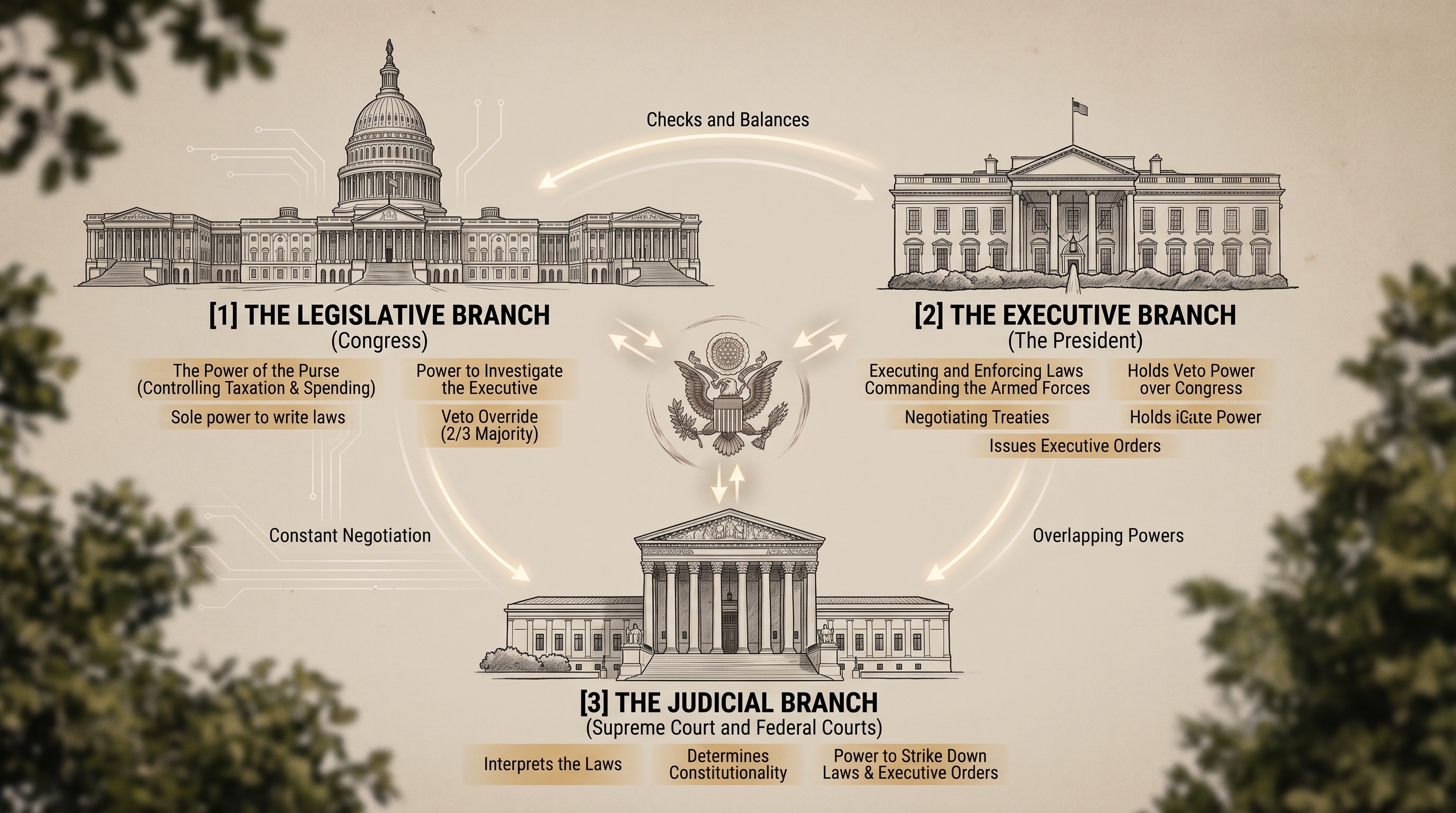
The US government is divided into three co-equal branches. This system of "checks and balances" ensures that no single entity gains absolute authority. The government operates through a constant negotiation of these overlapping powers:
- The Legislative Branch (Congress): Holds the "power of the purse" (controls taxation and government spending) and the sole power to write laws. It can also investigate the executive branch and override a presidential veto with a two-thirds majority.
- The Executive Branch (The President): Responsible for executing and enforcing laws. The President commands the armed forces, negotiates treaties, and holds veto power over congressional legislation. The President can also issue Executive Orders to direct federal agencies, though these are limited in scope.
- The Judicial Branch (Supreme Court and Federal Courts): Interprets laws and determines their constitutionality. They can strike down both laws passed by Congress and Executive Orders issued by the President if deemed unconstitutional.
2. The Legislative Branch: Understanding "The Houses"
Congress is bicameral (split into two chambers). Legislation must pass both chambers in identical form before reaching the President's desk.
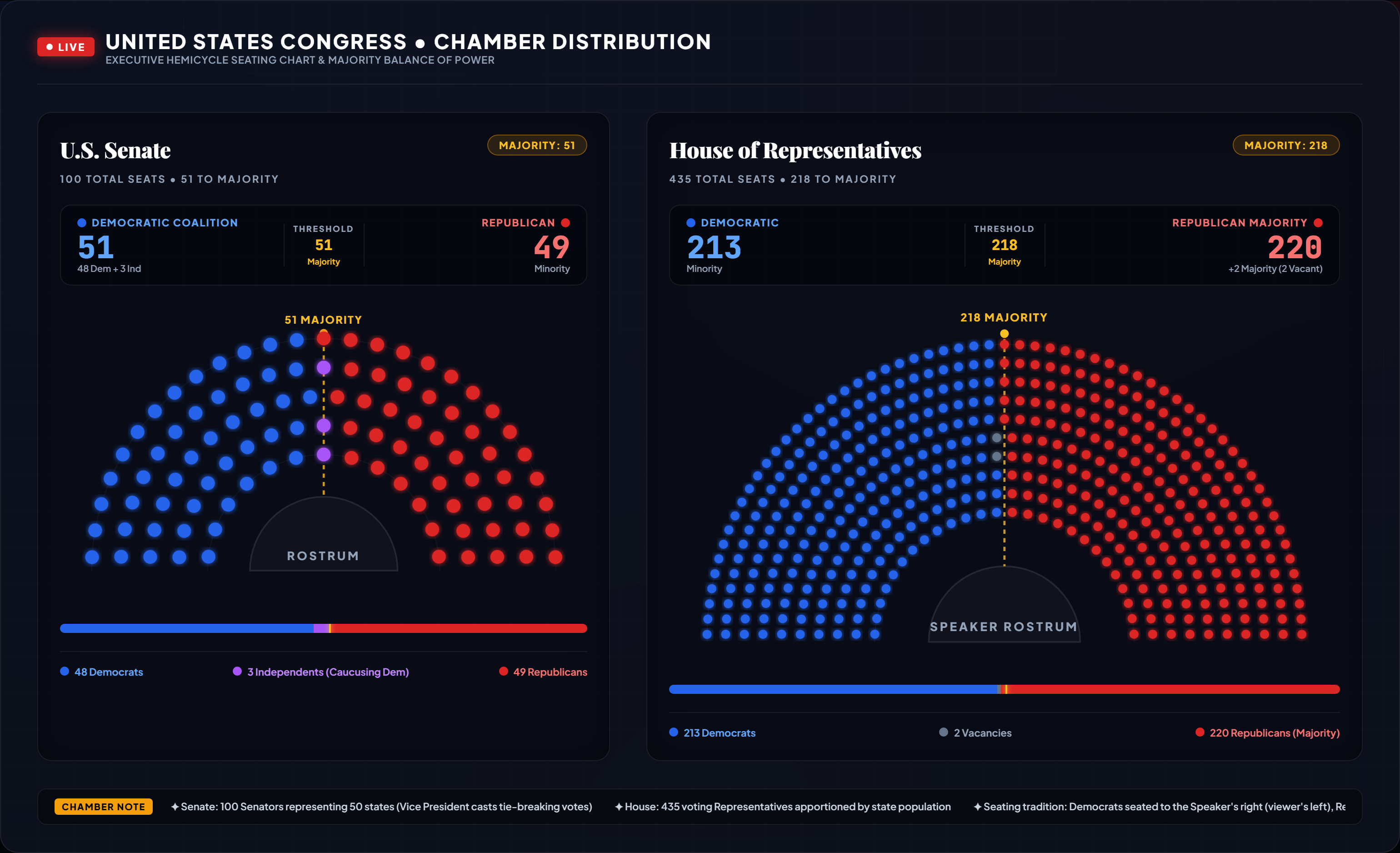
- The House of Representatives: Often called the "lower house," it has 435 members apportioned by state population. Representatives serve 2-year terms. The House has the exclusive power to initiate revenue bills and impeach federal officials.
- The Senate: The "upper house" has 100 members (two per state). Senators serve 6-year terms. The Senate holds the exclusive power to confirm the President's cabinet appointments, federal judges, and ratify international treaties.
3. The Executive Branch: The Presidency
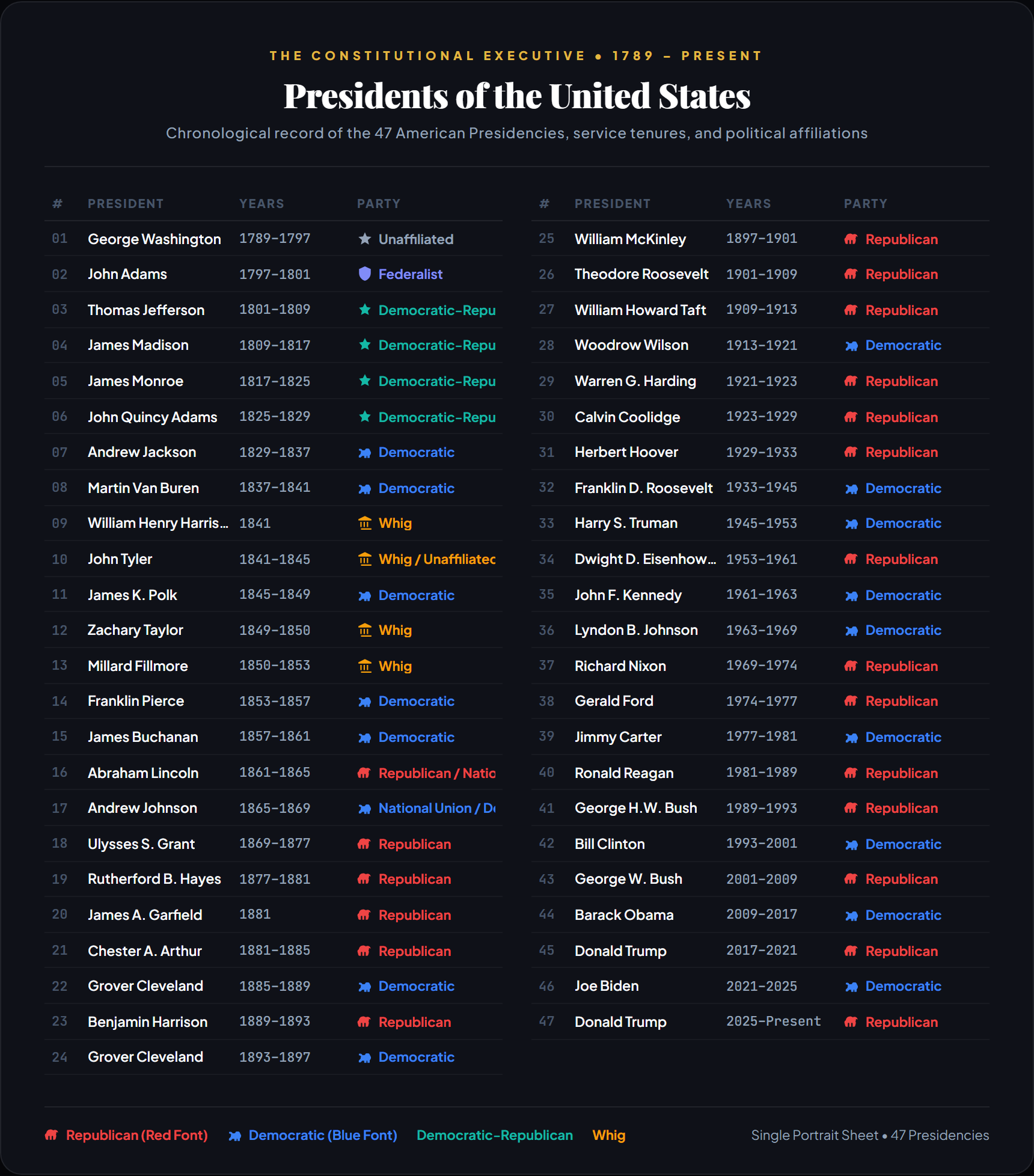
The US President is elected through the Electoral College, requiring 270 out of 538 electoral votes to win. While the President serves a 4-year term, their actual power to govern effectively is highly dependent on whether their party controls Congress.
4. The Two-Party System: Ideologies and Policy Impacts
The US is functionally a two-party system, which drives the legislative agenda. Understanding the core philosophies of these parties is essential for forecasting political environments:
- The Democratic Party: Generally associated with progressive policies, stronger federal government intervention, labor rights, and environmental regulations. They often favor higher taxation to fund social safety nets and green energy initiatives.
- The Republican Party (GOP): Generally associated with conservative policies, free-market capitalism, lower taxes, deregulation, and a smaller federal footprint. They tend to favor policies that stimulate domestic energy production and reduce federal oversight.
5. The Midterm Stakes: Why They Determine the President's Power
Midterm elections occur exactly halfway through a President's four-year term. While the current President is not on the ballot, these elections serve as a critical referendum on the administration and dictate the capacity to govern for the remaining two years.
The core issue is whether the administration can maintain a "governing trifecta"—control of the White House, the Senate, and the House of Representatives. The midterms will determine if the President can continue to control the legislative agenda or if they will face paralyzing opposition:
- Unified Government (Trifecta Maintained): If the President's party retains control of both the House and the Senate, the administration can continue to push sweeping legislative agendas—such as tax overhauls, massive deregulation, and budget allocations—with minimal opposition. A friendly Senate also ensures judicial and cabinet appointments are swiftly confirmed.
The Diversified/Divided Scenario (Loss of One or Both Chambers)
If the opposing party gains control of either the House or the Senate, the dynamic changes overnight. A divided government severely limits the President's power. The opposition can block new legislation, deny funding for key presidential initiatives (using the power of the purse), and halt political appointments (if the Senate is lost).
Scenario Discussion A: The Debt Ceiling and Fiscal Brinkmanship
In a divided scenario, routine government functions often become battlegrounds. A prime example is the raising of the Debt Ceiling. If the opposition controls the House while the current President holds the executive office, the House may refuse to raise the debt limit unless the President agrees to abandon certain initiatives or regulatory rollbacks. This fiscal brinkmanship can lead to prolonged Government Shutdowns. Global markets and international relations often react to this gridlock with severe volatility.
Scenario Discussion B: The Shift to Executive Orders and Agency Rulemaking
When Congress is divided and legislative progress stalls, the President is forced to govern through the Executive Branch. The administration would likely rely on Executive Orders and aggressive rulemaking through federal agencies to enact its agenda. However, this creates a volatile environment. Executive Orders are highly vulnerable to immediate judicial challenges (injunctions) and can be erased on day one by the next President. For international observers and policymakers, this means that policy changes under a divided government are often temporary and legally unstable.
Conclusion
For political analysts and international observers, midterms are a bellwether for policy direction. A shift in congressional power can stall the current President's agenda, alter domestic and foreign policies, and shift the government from a proactive legislative body to a gridlocked, investigative one. Understanding these power dynamics is the first step in comprehending the complexities of American governance and its global implications.